
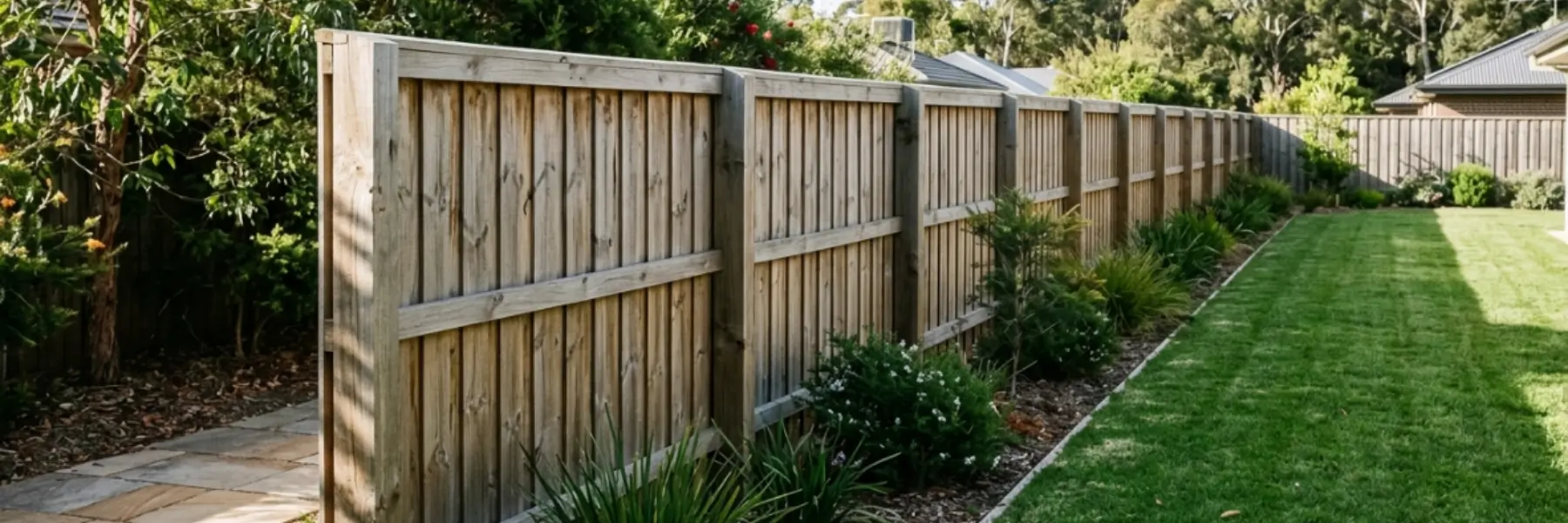
A fence looks like a clear line between two properties. But your fence is not necessarily the legal boundary of your property.
This is easy to overlook until you are planning a new fence, building an extension, buying a property, or starting work close to the edge of your land. So how do you know where your property actually ends? A boundary survey can help establish the position of your legal property boundary.
What Is a Property Boundary?
Your property boundary defines the legal extent of your land. It is established through property records, survey information and evidence on the ground. The position of a fence, retaining wall or other structure can offer useful information, but it does not automatically confirm the legal boundary.
This is where a cadastral survey, also referred to as a boundary survey, comes in. A cadastral survey is carried out by a licensed surveyor to investigate and establish the position of your property boundaries.
Why Doesn’t Your Fence Necessarily Mark the Boundary?
An existing fence can provide useful evidence when investigating a property boundary, but it does not automatically confirm the legal boundary.
Fences may have been installed based on an earlier fence, a neighbouring structure or the information available at the time, and they can be replaced or moved over the years. The position of the legal boundary needs to be established using relevant survey records, property information and evidence found on the ground.
When Might You Need a Boundary Survey?
You may want to consider a property boundary survey if you are:
- Building a new home
- Planning an extension or renovation
- Replacing or moving a fence
- Building a shed, pool or other structure
- Developing or subdividing your property
- Building close to a property boundary
- Buying or selling a property
- Unsure about the position of an existing boundary
- Concerned about a structure built close to your property
The right type of cadastral survey depends on what you are trying to establish and how the property is being used.
Building Close to a Property Boundary?
This is one of the most important times to establish the boundary before work begins.
Your plans may show where a building is intended to sit, but your builder needs reliable information about where the property boundary actually is. Establishing the boundary early helps your team understand how the proposed works relate to the property and can flag potential issues before construction starts.
If you are also having a detail or feature survey carried out for the project, the two survey requirements can often be coordinated.
Replacing Your Fence?

Replacing a fence is another common reason property owners contact a surveyor. The existing fence may have been there for years. It may look perfectly straight and sit exactly where you expect the boundary to be.
But appearances alone do not establish the legal boundary.
If you are investing in a new fence, knowing where the boundary sits before construction gives you greater confidence that the fence is being placed in the right location. Where there is uncertainty about the boundary, a boundary survey can establish the information needed before the new fence is installed.
What If Your Neighbour Is Building?
If your neighbour is planning construction close to the boundary, you may also want to understand where the boundary sits before work begins.
A cadastral survey can provide clear information about the position of the property boundary and help you understand how the proposed work relates to your land. If there is a disagreement about where a boundary sits, obtaining reliable survey information is an important first step, before assumptions are made based on an existing fence or structure.
What Does a Boundary Re-establishment Survey Involve?
A boundary re-establishment survey involves investigating the available survey and property information to establish the position of an existing legal boundary on the ground.
A surveyor may review:
- Title information
- Registered survey plans
- Previous survey records
- Existing survey marks
- Physical evidence found on the property and surrounding land
The surveyor then assesses this information to determine where the boundary sits. Depending on the property and the purpose of the survey, boundary points may also be marked on the ground. The exact work required will depend on the property, the available records and what you are planning to do.
Do I Need a Boundary Survey?
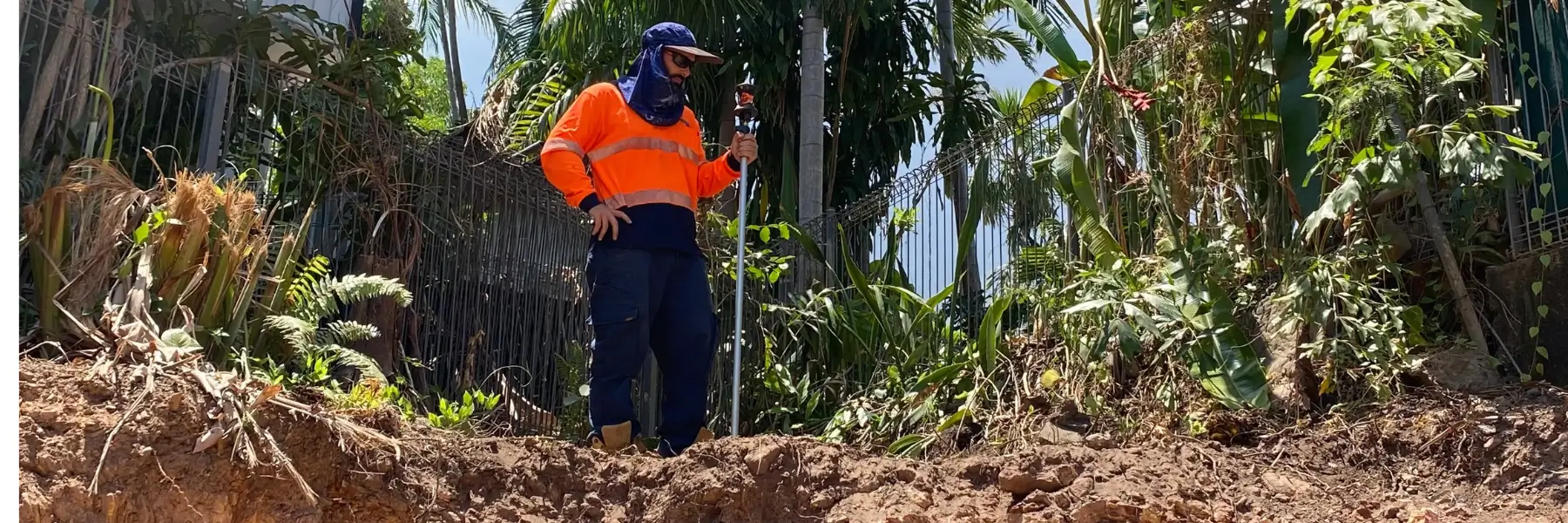
Not every property owner needs a boundary survey. But if you are about to build, extend, subdivide, replace a fence or carry out work close to a property boundary, it is worth establishing the boundary before you start.
The important thing is to do it before construction, rather than discovering a boundary issue once work is already underway.
Cadastral Surveying in Darwin and the Northern Territory
At Territory Surveys, our cadastral surveying services help property owners, developers and project teams understand and establish property boundaries. Our surveyors combine registered survey information, property records and evidence from the site to provide clear, practical survey information.
We provide boundary and cadastral surveying services across Darwin and the Northern Territory, including support for property development, construction and subdivision projects. You can read more about our team and experience on our About page.
If you are unsure what type of survey you need, our team can help you understand the survey requirements for your project.
Planning a fence, extension, new build or development? Talk to our team about your project.
Frequently Asked Questions
Do I need a survey before replacing a fence?
If there is any uncertainty about the position of the property boundary, a boundary survey can help confirm where the new fence should be located before construction begins.
What is the difference between a cadastral survey and a detail survey?
A cadastral survey focuses on legal property boundaries, ownership information and land subdivision requirements. A detail survey captures the physical features and levels of a site, such as buildings, services, vegetation and terrain, often to support design and construction.
Who can perform a cadastral survey in Australia?
Cadastral surveys must be completed by appropriately licensed cadastral surveyors. Territory Surveys works with licensed cadastral surveyors to provide boundary identification, re-establishment, subdivision and land development support.
Can my existing fence confirm my property boundary?
Not necessarily. An existing fence can provide evidence about how a property is occupied, but its position does not automatically establish the legal property boundary.
How long does a cadastral survey take?
The timeframe depends on the complexity of the property, the availability of historical records, site conditions and the type of survey required. We discuss your requirements upfront and provide a clear understanding of the expected process before starting.